A substitute scores and the change looks inspired. A team concedes and the same decision can suddenly seem reckless. Neither reaction tells the whole story. To analyse a football substitution, start with the problem it was meant to solve, the options available and the information you had at the time.
This checklist is for supporters watching a match, discussing the manager’s choices or recording a call of their own. It does not predict the next goal. Matchday Call records a supporter’s judgement; it does not control the real manager or players, and it is not a betting app.
1. Describe the problem before naming the substitute
Write one sentence about what keeps happening. For example: “Our right side cannot keep the ball long enough for the midfield to move up.” That gives you something to investigate. “Take him off” names an action without explaining why it might help.
Separate what you can see from what you are guessing. Repeated turnovers are observable. A player’s injury, fitness or instructions may be unknown. Do not turn a quiet spell or an unhappy expression into a medical explanation. Keep those uncertainties beside your observation.
2. Read the score, time and shape together
Imagine a fictional match at 62 minutes. Your side trails 1–0, its right winger has lost possession several times, and the opposing left-back keeps advancing. An attacking substitute might offer a way forward, but the space behind that change still needs consideration.
The same move at 0–0 or while protecting a lead could have a different purpose. Note the score, minute, current shape and any dismissal before judging the choice. These details explain the trade-off; they do not make one answer automatic. Your example should remain recognisable when you revisit it after full-time.
3. Match the incoming player to a job
In that fictional situation, suppose the bench offers a direct runner and a player who prefers receiving short passes. Decide which job matters first: running behind the advancing full-back, keeping possession, or helping the right-back defend. Different jobs can favour different choices.
Explain who leaves, who comes on and what changes for nearby players. Replacing a winger with another winger may still alter the way a side attacks. Adding a forward can require a midfielder to cover more ground. Judge the proposed role rather than the substitute’s reputation alone.
4. Compare your change with one realistic alternative
Consider keeping the same players and changing their positions or instructions. In our example, the winger could stay wider while a midfielder offers a shorter pass. That is an alternative to changing personnel, with its own possible costs.
Use only options you can reasonably discuss from the available team sheet and match information. If bench availability is unclear, say so. Briefly explain why you prefer your change and what you would watch for afterwards. This makes a later review more useful than a list of every possible substitution.
5. Record a short checklist while the decision is live
Before the next incident changes your view, capture the reasoning in a few lines. You can use this checklist in your own notes, then use the supported choices in Matchday Call’s call builder to record your call.
- Context: what are the minute, score and relevant match conditions?
- Problem: what pattern have you actually observed?
- Change: who comes off, who comes on, and what job should change?
- Cost: which space, role or option might your decision weaken?
- Review: what evidence would strengthen or weaken your reasoning?
6. Review the reasoning without letting the result decide everything
Suppose your fictional substitute scores from a deflection. Enjoy the goal, then return to your original question. Did the team keep possession better on the right? Did the opposition still find the same space? A favourable finish does not answer either question by itself.
Likewise, conceding after a change does not automatically show the substitution was wrong. Check whether the event connects to the risk you identified, and whether another incident changed the situation. Include evidence that challenges your call. Where coverage is incomplete, leave the conclusion open rather than filling the gap with certainty.
A fair note might read: “The incoming player offered the short pass I wanted, but the right-back still faced two opponents when possession turned over. My call addressed keeping the ball, while leaving the defensive problem unresolved.” That is a useful finding even without a goal. Keep the original reasoning beside the review so that a final score cannot quietly rewrite what you expected.
Try the checklist in a practice match
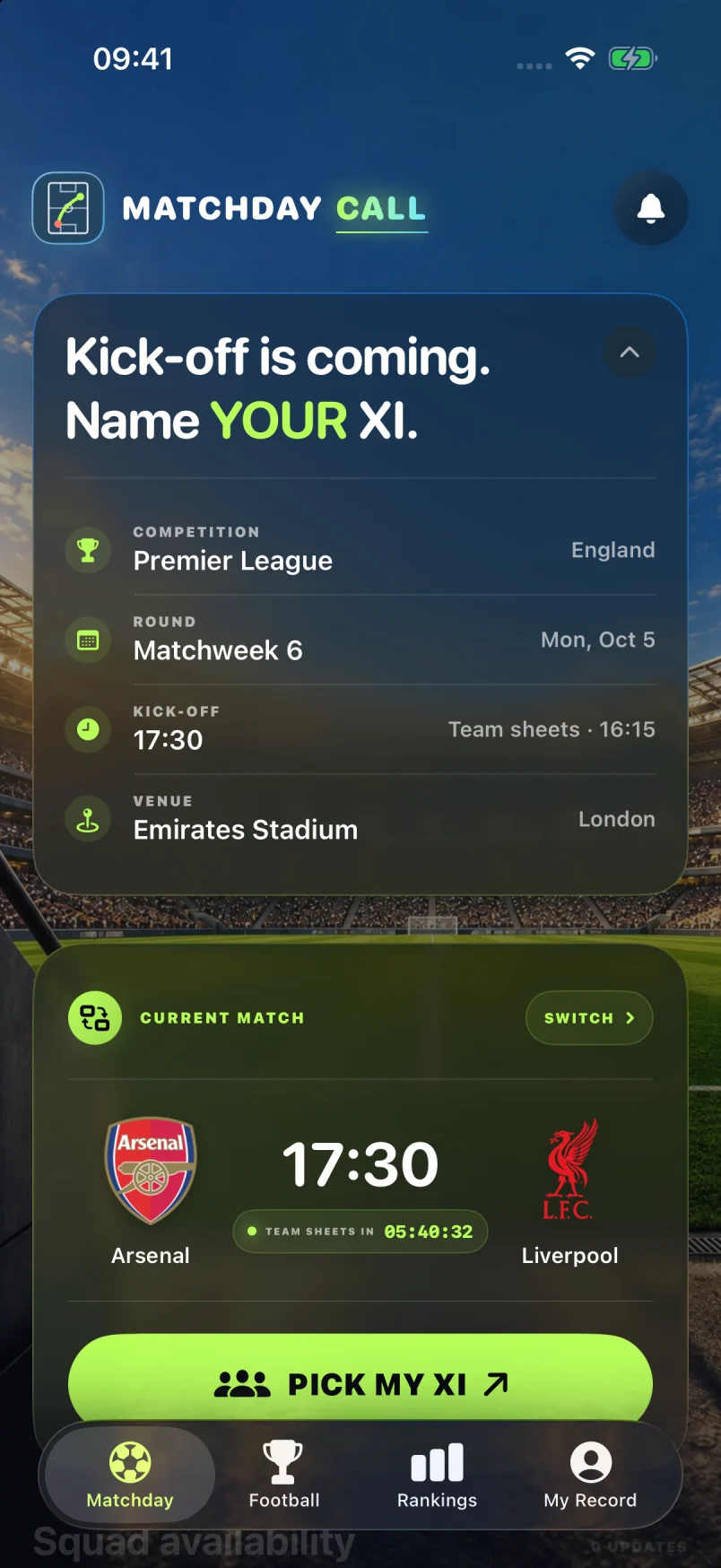
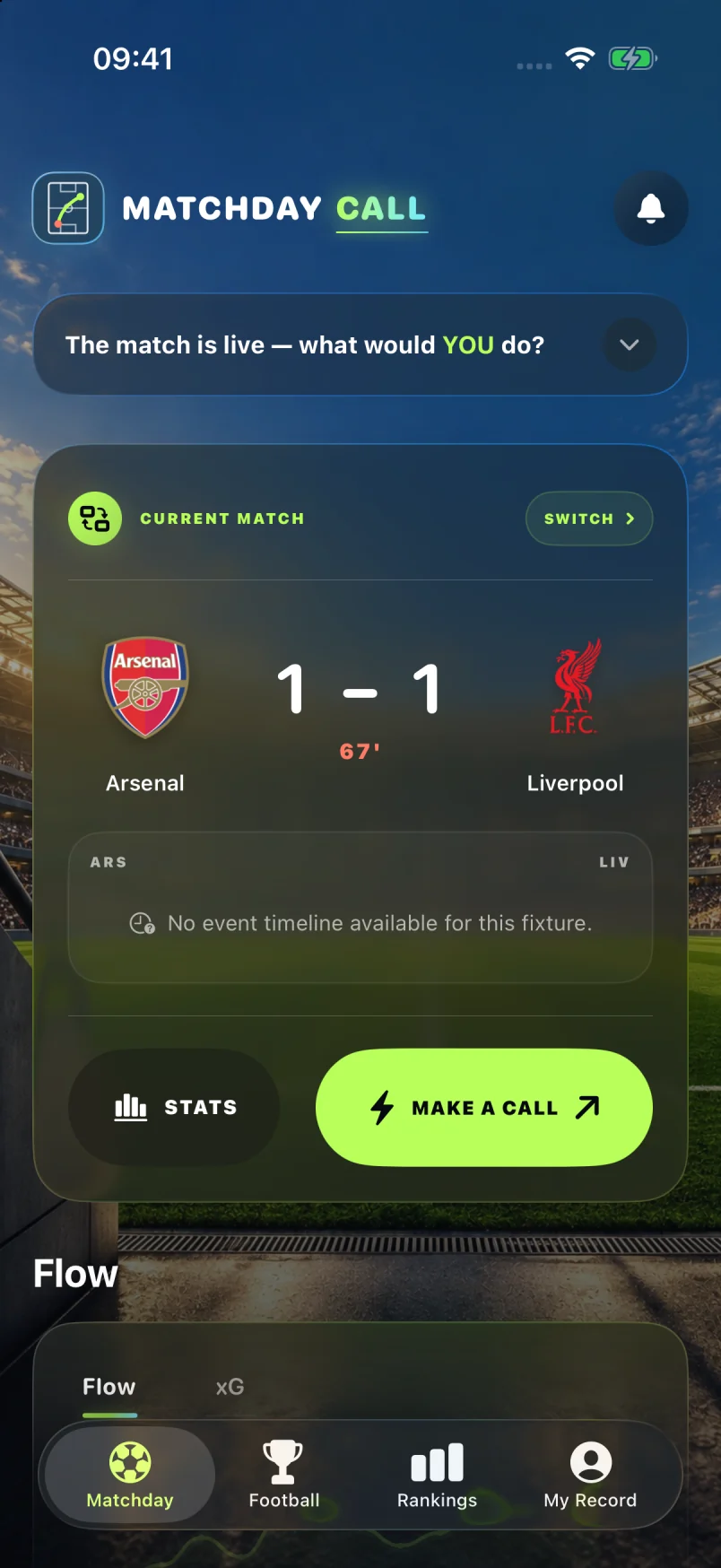
Matchday Call’s guided practice introduces picking an XI, making a call and reviewing the match. In supported live fixtures, Make a Call lets you connect a diagnosis with tactical responses or substitutions, check the decision and submit while the relevant window is open. Live submissions require sign-in. Check current feature access in the app, and confirm that your submission was accepted.
Later, the Matchday Review uses the available evidence to revisit recorded decisions. Assessments can remain pending or limited, and only qualifying settled calls contribute to ranked Decision Scores. Practice is a useful place to learn the flow before your next fixture.
Explore the guided practice matchKeep your next matchday judgement on record
Download Matchday Call free for iPhone running iOS 26.0 or later. You can browse as a guest before signing in to save selections and submit live calls. Check current feature access in the app; competition coverage and individual features vary. Start with one clear observation, make your case and give yourself something useful to review after the whistle.
Get Matchday Call on the App Store